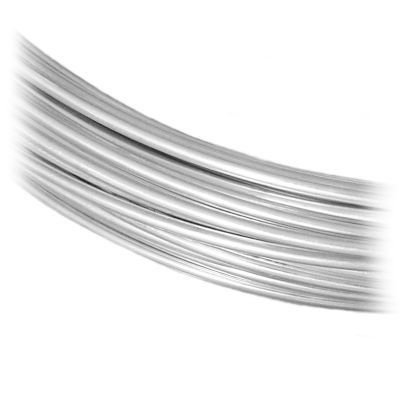
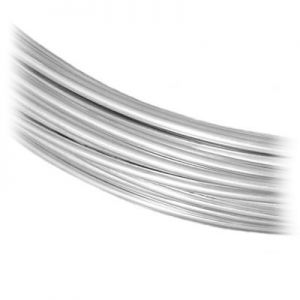
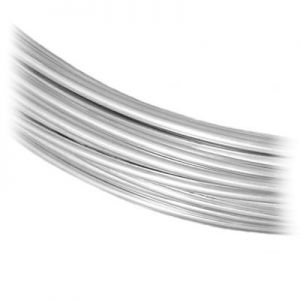
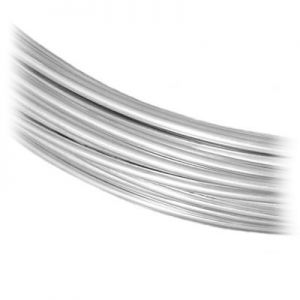
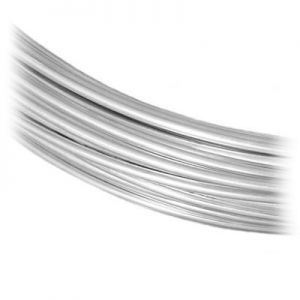
Among the many jewelry products, there are those that are dedicated to specific decorations in a specific size, and those that are used for original jewelry projects. The latter ones include, for example, jewellery wires. They can be divided into various categories depending on the adopted criterion, such as silver fineness, hardness, thickness and cross-section. The silver wires are largely used to create jewelry using the wire wrapping technique, which involves wrapping thicker models with thinner and softer ones. It is an extremely creative method that allows you to make beautiful and unique designs. This technique can also be used to compose other accessories, according to the imagination of the designer. The presented silver thin soft wire for jewelry making has a fineness of 925 and is round in cross-section. It can be used to create intricate, braided decorations on a base made of harder wire. It can also be used to connect wires or other jewelry findings. Soft wires are a good choice for beginners - they make it easier to master the wire wrapping technique. However, as science progresses and the desire to create more sophisticated designs, models of different hardness and thickness will be needed. Proper selection allows you to make a durable ornament, the elements of which can withstand the stresses and weight of, for example, interwoven stone.
Silver 925 - Jewellery finding made in AG 925
free of nickel
925 silver coated with a layer of 18K AU gold (LIGHT YELLOW GOLD)
Element covered with two layers of 18-carat gold: primer and finish coat, which makes gold plating much more durable. Additional, third layer consists of technology based solely on noble metals. The additional layer of galvanic coating has been developed by our specialists and protects the product from oxidation and discoloration, while maintaining hypoallergenic properties. The coating thickness is 0.5μm, of which gold constitutes 0.4 μm..
Silver 925 18K gold plated, AU (ROSE GOLD PLATED)
Element covered with two layers of 18-carat rose gold: primer and finish coat, which makes gold plating much more durable. Layer gold thickness is 0,4 μm.
Silver 925 24K gold plated, AU (GOLD PLATED)
Element covered with two layers of 24-carat gold: primer and finish coat, which makes gold plating much more durable. Layer gold thickness is 0,4 μm.
925 silver coated with a layer of 18K AU gold (LIGHT YELLOW GOLD)
Element covered with two layers of 18-carat gold: primer and finish coat, which makes gold plating much more durable. Additional, third layer consists of technology based solely on noble metals. The additional layer of galvanic coating has been developed by our specialists and protects the product from oxidation and discoloration, while maintaining hypoallergenic properties. The coating thickness is 0.5μm, of which gold constitutes 0.4 μm..
Silver 925 18K gold plated, AU (ROSE GOLD PLATED)
Element covered with two layers of 18-carat rose gold: primer and finish coat, which makes gold plating much more durable. Layer gold thickness is 0,4 μm.
Silver 925 24K gold plated, AU (GOLD PLATED)
Element covered with two layers of 24-carat gold: primer and finish coat, which makes gold plating much more durable. Layer gold thickness is 0,4 μm.
There is a possibility of ordering a thicker galvanic coating
Information on Proper Use of Jewelry Components:
1. Avoiding Contact with Water
It is recommended to prevent components from coming into contact with water, including seawater or pool water. Such exposure may cause surface tarnishing and discoloration..
2. Avoiding Contact with Cosmetics and Detergents
Components should be protected from contact with cosmetics and household cleaning detergents. Certain substances in these products can trigger chemical reactions, leading to darkening or damage to the metal surface..
3. Storage
Components should be stored in a dry place, preferably in specialized pouches or boxes that protect against moisture and sunlight. Proper storage conditions help prevent corrosion and tarnishing..
4. Protection Against Mechanical Damage
Mechanical damage, such as scratches or deformation, should be avoided. During storage, it is advisable to separate components from other metal objects or tools..
5. Cleaning
Components should only be cleaned with soft, gentle cloths or specialized cleaners designed for silver and gold. Do not use abrasive brushes or materials that could scratch the surface..
6. Inspection Before Use
Before using components in jewelry production, it is recommended to inspect their condition, such as checking for minor damage, deformations, or loose elements..
7. Safety
Components are not intended as toys for children. Care should be taken to avoid situations where children might put them in their mouths or swallow them..


 Connection is safe and SSL-encrypted

 English
 Polski
 German
 French
 Romanian
 Slovak
 Czech
Czech
 Italiano
 Español